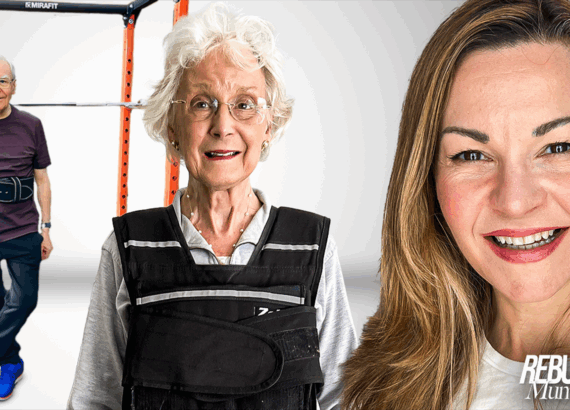
Rebuilding Mum & Dad: Watch Episodes and Follow My Parents’ Strength Training Progress
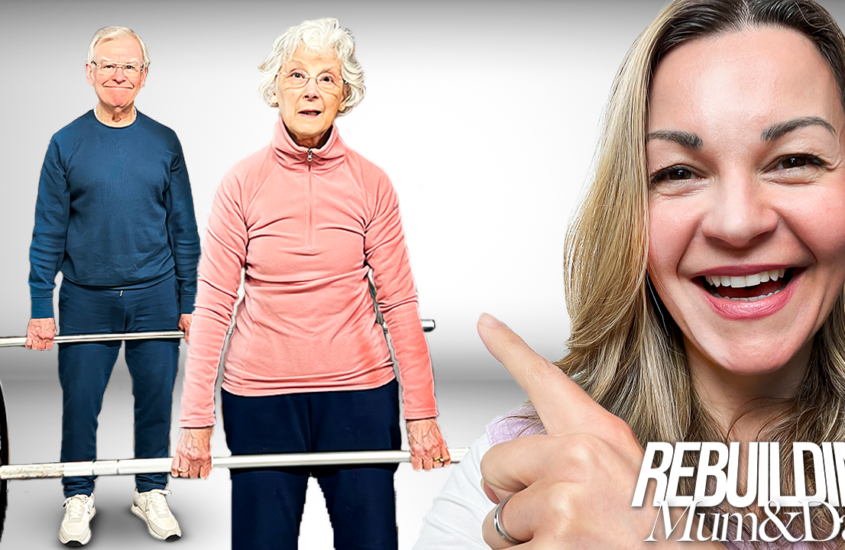
Can you build strength, muscle and confidence in later life? The answer to that is most definitely yes, and my parents are proof!
Welcome to Rebuilding Mum & Dad, the ongoing documentary series from The Honest Channel, following my parents, Rhoda and Michael, as they undertake a progressive strength training program in their 80s.
When we started this journey in January 2025, we had no idea just how much their lives would change.
My mum, then 81, had experienced a significant decline in mobility and confidence. She was struggling to walk for more than a few steps without assistance, and everyday activities had become increasingly difficult.
My dad, then 80, was recovering from health setbacks of his own, and we wanted to help him maintain his strength, independence and quality of life as he got older.
Nearly two years later, they’re both lifting heavier weights than ever before. Mum can walk for more than 10 minutes (at pace) unaided, and deadlifts over 100lbs, while Dad is deadlifting 200lbs (91kg) for three consecutive repetitions.
But the numbers are only part of the story.
What makes their progress so remarkable is how much stronger, more capable and more confident they have become in their everyday lives.
And they’re still improving.
What is Rebuilding Mum & Dad?
Rebuilding Mum & Dad is a documentary series on my YouTube channel, The Honest Channel, which follows my parents’ journey through strength training in later life. Scroll down the page to watch latest episodes.
I’m Clare Johnston, a journalist in my 50s with a mission to share the best information and advice on how to age well, look and feel great for longer.
I’ve spent years interviewing experts in healthy ageing, longevity and exercise science. But I wanted to go beyond the research and explore what might actually be possible for my own parents.
Could people in their 80s, with the usual health challenges and physical limitations that come with age, really become significantly stronger?
Could strength training help them preserve their independence and improve their quality of life?
And what would happen if they committed to a structured programme and stuck with it?
That’s what we set out to discover.
Rather than a short-term fitness challenge, this is a long-term project following their progress, setbacks, achievements and experiences as they grow older.
The Strength Training Programme We Follow
Mum and Dad train twice a week with coach Chris Reis, following the principles of the Starting Strength method of progressive barbell training.
Starting Strength is a strength training system built around fundamental movements that develop whole-body strength.
Our programme centres on four main exercises:
- Squat: Strengthens the legs, hips and trunk, supporting movements such as standing up from a chair.
- Deadlift: Develops strength through the hips, legs, back and grip, helping with lifting objects safely.
- Bench press: Builds upper-body pushing strength.
- Overhead press: Develops strength in the shoulders, arms and upper body.
Each session lasts approximately 90 minutes, including warm-ups, rest periods and coaching.
The principle is simple: start with weights you can manage safely, learn the movements properly, and gradually increase the load as your strength improves.
This is known as progressive overload, and it’s one of the fundamental principles of building strength and muscle at any age.
Importantly, the exercises and weights are adapted to each person’s abilities. Mum and Dad didn’t begin by lifting anything close to the weights they can manage today.
Their progress has come through careful coaching, gradual increases in resistance and, above all, consistency.
Just two sessions a week have made an extraordinary difference.
Mum’s Transformation: From Limited Mobility to Lifting Weights in Her 80s
Of all the changes we’ve seen, Mum’s transformation has been particularly moving.
When we began, she struggled with mobility, nearly constant back pain and was becoming frail.
In early 2025, she could manage only around 30 seconds of walking unaided.
By October that year, she could walk for six minutes without assistance.
And during a family holiday to Spain in 2026, she managed a 30-minute walk from the plane to passport control using just a walking stick — something that would previously have seemed almost impossible.
She’s also been able to enjoy shopping trips and seaside walks again, and has largely stopped relying on the painkillers she previously used for back discomfort.
Her progress in the gym has been equally impressive.
She’s progressed to deadlifting more than 45kg and bench pressing around 31kg, while continuing to build strength through her squats and overhead presses.
For someone who once struggled with everyday physical tasks, this represents a remarkable change.
But perhaps the biggest transformation has been in her confidence and her mindset.
She’s increasingly willing to try things she might once have avoided, and she’s rediscovered a sense of independence and positivity that I feared she might have lost.
Dad’s Progress: Deadlifting 200lbs in His 80s
Dad’s journey has been different, but equally inspiring.
He began strength training following a difficult period with complications in his recovery from hernia surgery.
Today, he’s stronger than he was when he started, and his deadlift has become one of the highlights of the series.
In October 2026, at 82 years old, he’s performing three consecutive deadlifts with 200lbs (approximately 91kg).
He’s also previously lifted 97kg.
Watching him develop this level of strength in his 80s has been extraordinary, particularly because we’re not talking about someone who spent his life training with barbells.
His progress demonstrates something important: chronological age alone doesn’t determine our capacity to improve.
Although everyone responds differently to exercise, research shows that older adults can still increase muscle strength and physical function through appropriately prescribed resistance training.
Why Strength Training Matters So Much as We Age
One of the biggest challenges of aging is the gradual loss of muscle mass and strength.
Age-related muscle loss, known as sarcopenia, can contribute to reduced mobility, frailty and difficulties with everyday activities – and is associated with earlier death and increased risk of age-related diseases.
Muscle strength plays an important role in maintaining independence – and also our metabolic health.
And while ageing is inevitable, significant physical decline is not always inevitable at the same rate.
Research consistently shows that resistance training can improve strength and physical function in older adults, including people in their 70s, 80s and beyond.
For Mum and Dad, the benefits have gone well beyond the gym.
Is It Safe to Start Weightlifting in Your 80s?
One of the questions we’re asked most often is whether lifting heavy weights is safe for people in their 80s.
The answer is that resistance training can be both safe and beneficial for many older adults, provided the program is appropriate to their abilities, health conditions and experience.
It’s important to understand that Mum and Dad didn’t start by lifting heavy weights.
They began with manageable loads and built their strength gradually under the supervision of an experienced coach.
Good technique, individual assessment, progressive loading and appropriate recovery are all essential.
People with osteoporosis, cardiovascular conditions, significant mobility limitations or other medical concerns may need additional assessment and adaptations before beginning a programme.
And barbell training isn’t the only way to build strength. Machines, resistance bands, dumbbells and bodyweight exercises can also be effective.
The most important message is that it’s never too late to start improving your strength, even if the starting point is very modest.
You’ll find more info on where and how to begin on my dedicated page www.honest.scot/rebuild