Can You Improve Bone Density? The Answer is Yes, And This Is How
When it comes to healthy aging, we often focus on our heart or our waistline, but there is a critical system that is frequently overlooked until something goes wrong: our bones.
For many, a diagnosis of osteopenia or osteoporosis can feel like a life sentence of fragility.
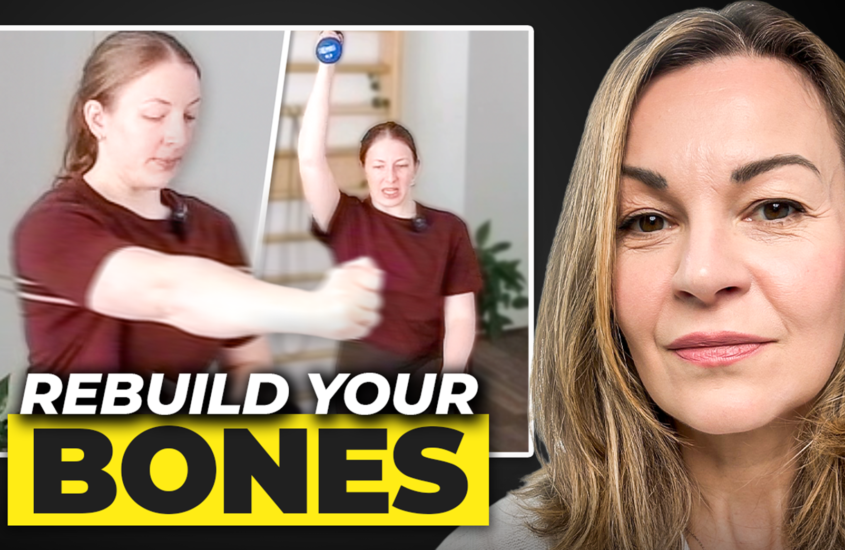
However, as we explored in our latest episode with specialist strength trainer and nutritional therapist, Michaela Smith, your bones are not static structures—they are living, dynamic tissues that can be rebuilt.
Michaela helped create the Kaari Prehab program to help women with osteoporosis or osteopenia rebuild their bone density through strength training.
The Dynamic Nature of Bone
A common misconception is that bones are simply the “scaffolding” for our muscles. In reality, bone is constantly being broken down and rebuilt.
While we reach peak bone density in our late 20s, the balance shifts as we age, especially for women during perimenopause and menopause due to declining estrogen. The good news? You can influence this balance.
Why the DEXA Scan Matters
Early detection is your best defense. Michaela emphasizes the importance of a DEXA scan, ideally as you enter perimenopause. This scan provides a T-score, comparing your bone density to that of a healthy 30-year-old.
- Normal: -1.0 or above
- Osteopenia (Low Bone Density): -1.0 to -2.5
- Osteoporosis: -2.5 or lower
Early advocacy for these scans can prevent the “silent” fractures—often in the wrist, spine, or hip—that lead to a loss of independence.
The Power of Strength Training
While medications have their place, Michaela explains that they cannot replace the wide-reaching benefits of strength training. When you lift weights, you aren’t just building muscle; you are sending a mechanical signal to your bones to lay down new tissue.
If you’re worried about being “too frail” to start, remember that “heavy” is subjective.
For some, a bodyweight sit-to-stand is the perfect starting point.
The key is progressive overload—continuously giving your bones a nudge and increasing the challenge so they don’t get bored and stagnant.
Beyond the Weight Rack: Impact and Recovery
We also discussed two additional vital components of a rounded bone-health program:
- Impact Training: Simple movements like marching in place or heel drops create “bottom-up” compression that stimulates bone-building cells.
- Strategic Recovery: Your bones and muscles don’t actually get stronger during the workout; they get stronger while you rest. Proper sleep, stress management, and nutrition are the “building blocks” that solidify your hard work.
Nutrition and Lifestyle
Rebuilding bone requires the right fuel. Michaela suggests focusing on whole foods rich in minerals including magnesium, calcium, and Vitamin D.
Protein is also essential—aiming for 1 to 1.2 grams per kilogram of body weight is a well-researched, approachable goal for many.
It’s Never Too Late
An osteoporosis diagnosis doesn’t mean you have to stop living an active life. By combining smart strength training, adequate nutrition, and a bit of self-advocacy, you can take charge of your skeletal health.
To dive deeper into the science of rebuilding bone, watch the full episode:
Read More, Including My Recommended Home Strength Training Programs:
About Me
I’m Clare Johnston, a journalist dedicated to sharing evidenced information and advice around how to age well, look and feel good for longer. I do that here and on The Honest Channel on YouTube.