How I’m Slowing Skin Aging at 53
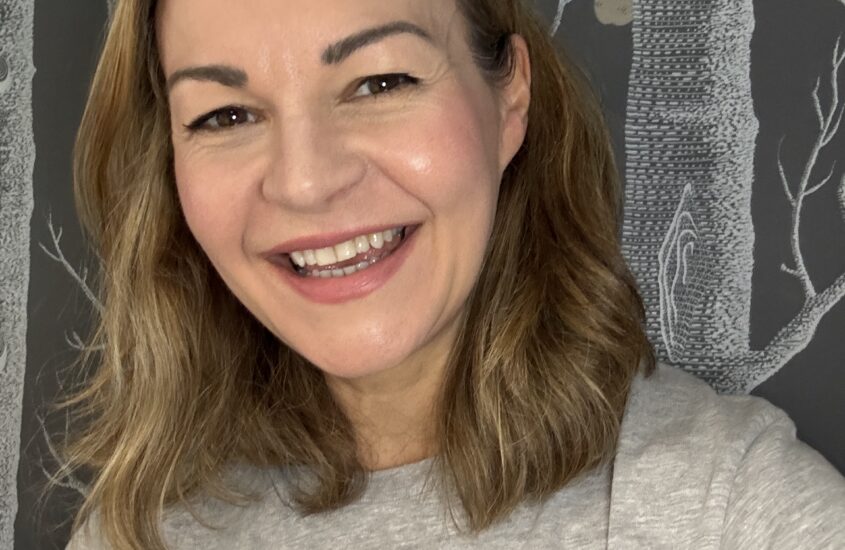
Am I about to tell you that at 53 my skin isn’t aging? Absolutely not.
I can see the march of time. I notice it particularly on my eyelids, around my jawline and jowls, and on the backs of my hands.
But I’ve spent the past several years exploring what contributes to aging in general — along with skin aging. I’ve interviewed doctors, dermatologists, microbiome experts, scientists and super-agers, and I’ve tried an awful lot of things on my own skin.
Over that time, a few things have really stood out to me. Things where the science is particularly interesting and, in some cases, where I’ve seen a noticeable difference myself.
I think this combination has helped me slow some of the visible signs of skin aging, including wrinkles, pigmentation, loss of elasticity and changes in skin hydration and texture.
My approach these days is actually fairly natural. I don’t currently use Botox or dermal fillers. I did dabble with injectables a few years ago, but decided they weren’t really for me.
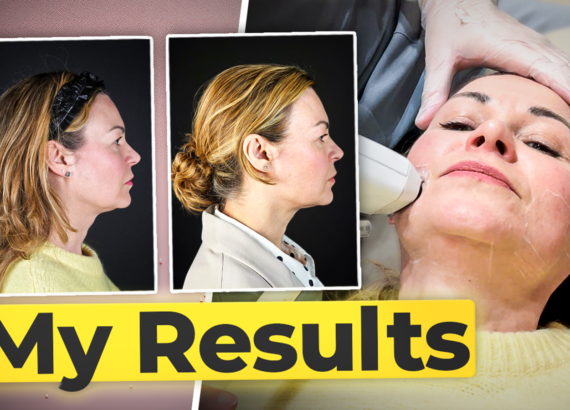
I also recently tried a Sofwave ultrasound treatment which I thought did give me some slight tightening around my jawline.
In the main though, I follow a fairly consistent plan designed to keep my skin functioning as well as possible as I age – and, as a result, keep it looking stronger for longer.
Below you can read about the seven things that made a difference and see the products I use in my skincare routine.
1. Light therapy: BBL, home laser and red light
Light has probably been one of the biggest game-changers for my skin.
I’m currently using light in three quite different ways: professional BBL (broadband light) treatments, my NIRA home laser, and red light therapy.
BBL for rosacea, thread veins and pigmentation
I originally turned to BBL largely because of my rosacea.
I was getting cycles of redness and annoying little spots on my cheeks — definitely fuelled in my case by hormonal fluctuations — as well as a few persistent thread veins and areas of pigmentation.
BBL has made a really noticeable difference to all of that for me.
Broadband light is related to intense pulsed light, or IPL. Light energy can target chromophores including melanin in pigmentation and haemoglobin in blood vessels. This is why IPL-type treatments can be used for pigmentation, redness and visible blood vessels.
The results aren’t necessarily permanent. New pigmentation and blood vessels can appear, which is why maintenance treatments may be recommended.
But my own experience has been impressive enough that BBL has become one of the professional treatments I will keep going back for.
NIRA home laser
I’ve also used a NIRA non-ablative home laser for several years, which I’ve also reviewed on this website and my YouTube channel.
Rather than removing the surface of the skin, non-ablative laser technology delivers energy beneath it, heating the water in your skin with the aim of stimulating collagen production.
In my experience, I don’t think it tightens skin but it’s helped smooth out frown lines to the point I no longer go for botox treatments.
Red light therapy for wrinkles and collagen
Then there’s red light therapy.
This is an area where the scientific evidence has become increasingly interesting.
One randomised controlled trial involving 137 women aged between 40 and 65 investigated 660-nanometre red light. After 10 treatment sessions over four weeks, researchers reported a reduction of around 32% in measured periocular wrinkle volume.
Other controlled studies have reported improvements in skin roughness and collagen density.
That doesn’t mean every red-light face mask will produce the same results. Wavelength, dose, irradiance and treatment protocol matter as I cover in my guide to buying a red light device.
I currently use the Maysama pulsed red-light mask.
For me, light therapy has become one of the more interesting non-invasive areas of skin-aging research — particularly because it doesn’t require deliberately damaging the skin to stimulate a response.
2. Protecting my skin barrier
This might be one of the biggest changes in the way I think about skincare.
For years, anti-aging skincare seemed to be all about doing things to our skin; exfoliation, acid peels, retinoids.
I still use a couple of actives, but these days I’m equally interested in what I’m not doing.
Our skin barrier changes as we age. Skin can become drier and less efficient at holding onto water, while its ability to recover from damage can also change.
And damaged, chronically inflamed skin isn’t healthy skin.
There’s also some fascinating research suggesting that the importance of the skin barrier may extend beyond the skin itself which I’ve explored in more depth on this website.
What I use to protect my skin barrier
At the higher-budget end, I still use Calecim Multi-Action Cream, which I’ve used for years. It’s too expensive for me to use constantly, so I cycle it with much cheaper products.
More recently I’ve found Aveeno Skin Relief Lotion particularly good for locking in moisture without making my skin feel heavy.
The older I get, the more convinced I become that a simple moisturiser your skin loves can sometimes be more useful than adding another fashionable active.
3. Sunscreen: still the boring but essential one
There is no clever anti-aging skincare routine that can compensate for repeatedly exposing your skin to excessive ultraviolet radiation.
UV contributes to collagen degradation, pigmentation and many of the changes we associate with photoaging.
And unlike many supposed anti-aging interventions, sunscreen has excellent long-term human evidence behind it.
One of my favourite studies is a randomised controlled trial involving 903 adults in Australia.
After 4.5 years, the group assigned to daily broad-spectrum sunscreen showed 24% less skin aging than people assigned to discretionary sunscreen use. The daily-use group showed no detectable increase in skin aging over the study period.
Living in the UK, I generally apply sunscreen once in the morning as part of my normal routine. Obviously, if I’m outside for prolonged periods, swimming, sweating or somewhere with intense UV exposure, I’ll reapply.
I’ve recently switched to OneSkin’s mineral sunscreen because my skin has become increasingly reactive and I find it extremely easy to tolerate. It’s fragrance-free and lightweight and, importantly for me, doesn’t leave me looking ghostly.
After trying everything from Vaseline to specialist creams, it turned out the OneSkin lip mask was bizarrely the thing that got rid of the eyelid dermatitis that’s troubled me all summer. So that gave me a much shinier view of this brand which I’ve reviewed previously here.
I’ve also used Aveeno’s tinted mineral sunscreen as a less expensive option.
Ultimately, the important thing isn’t the particular sunscreen I use.
It’s finding one that provides appropriate protection and that my skin tolerates well enough that I actually want to put it on every morning.
The Skincare Products I Use (browse the carousel using the left and right arrows)
4. Retinal — but cautiously
Then we come to retinoids.
Retinoids remain one of the best-researched categories of topical skincare for photoaging.
But I’ve learnt a slightly painful lesson here:
More isn’t always better.
I use Medik8 retinal, or retinaldehyde, but these days I deliberately stick to a relatively low strength.
I previously worked my way up through stronger formulations because that’s what we’re so often encouraged to do.
And my skin became drier and more reactive.
Looking back, I suspect pushing the strength may also have contributed to my rosacea-prone skin and eyelid dermatitis.
So I’ve gone backwards.
And my skin is happier.
Retinaldehyde is converted in the skin towards retinoic acid, and clinical studies have found improvements in measures of photoaged skin.
I mainly use retinal because I find it incredibly good at keeping the surface of my skin smooth and clear and making my pores appear smaller, alongside the potential benefits for collagen and photoaging.
But I keep it away from my eyelids.
In fact, because skincare can migrate after application, I now leave quite a generous exclusion zone around my eyes, including my upper cheeks and underneath my brow.
I’d rather use a little less retinal consistently than repeatedly damage my skin barrier trying to tolerate more.
5. Peptides
Another skincare category I continue to like is peptides.
Peptides are essentially short chains of amino acids, and some can act as signalling molecules within the skin.
The problem is that “contains peptides” has become such a common skincare marketing claim that it doesn’t actually tell us very much.
Different peptides have different functions, and the formulation and delivery system matter a lot.
So rather than buying something simply because the word peptide appears on the bottle, I look at which peptides are actually in it and what evidence exists for them.
I’ve created a separate guide to some of the most interesting skincare peptides and product options at different budgets.
6. Strength training!
One of the most fascinating skin-aging studies I’ve come across in recent years was about strength training.
A 2023 study published in Scientific Reports investigated the effects of aerobic and resistance exercise during a 16-week intervention involving sedentary middle-aged Japanese women.
Both types of exercise improved measures including skin elasticity and structure.
But resistance training did something extra: It increased dermal thickness.
It suggests the condition of our skin isn’t simply determined by what we smear onto the outside of it.
Our muscles are metabolically active tissue.
Exercise changes inflammatory signalling, metabolism and numerous circulating factors throughout the body.
And our skin appears to respond to some of those signals.
I’ve been strength training consistently in my 50s primarily because I want to maintain muscle, strength and bone health as I age.
If healthier, thicker skin turns out to be another benefit, I’ll take it!
7. Facial massage
Finally, there’s good old-fashioned face massage.
Sometimes I’ll use a microcurrent device, sometimes a basic roller from Beauty Pie but you can just use your hands.
We do know that facial massage can temporarily increase blood flow to the skin — and since our microcirculation is responsible for delivering oxygen and nutrients to our tissues, that can only be a good thing.
This article contains commissionable links where available which means I earn a small amount on any product purchased using one of my links.